You walk into the living room and spot that brown ring expanding across the drywall. Water leaks never happen on a convenient schedule, and if you live around Dacula, Georgia, you know how quickly sudden summer downpours or freezing winter snaps can test a roof. When you see a wet ceiling, your stomach drops. Summit Restoration Company sees this happen to homeowners throughout Dacula, GA very often. Here is a straightforward breakdown of what you need to do before, during, and after tackling ceiling water damage.
Before You Touch Anything: Stop the Source
Never start patching drywall if water is still actively dripping. You are just wasting time and materials. Head up into the attic if you have safe access. Look for compromised flashing around chimneys, missing shingles, or a leaky plumbing line running through the floor joists above. If it is actively raining outside and water is pouring through, stick a bucket underneath and punch a small hole in the center of the blistered paint to let the trapped water drain out. This prevents the drywall from sagging further or collapsing unexpectedly.
Summit Restoration Company always tells property owners that safety comes first. Turn off the breaker if the leak is close to a ceiling fan or light fixture. Electricity and water do not mix, and an electrical fire is the last thing you want on top of a roof leak.
What You Can DIY vs. When to Call a Pro
Property owners often like to complete weekend projects, but ceilings can be tricky. Let us look at where you draw the line for Water Damage Restoration Service.
- Small stains from a resolved, minor leak can usually be handled with a good oil-based primer and a coat of ceiling paint.
- Sagging, spongy, or crumbling drywall has to be cut out and replaced with a fresh patch.
- If mold is already present across a large surface area, step back. Georgia humidity provides the ideal breeding ground for toxic spores, and disturbing them without proper containment spreads them through your HVAC system.
- Structural damage to roof joists or multi-story water tracking requires professional tools and structural evaluation.
During the Repair: Step-by-Step
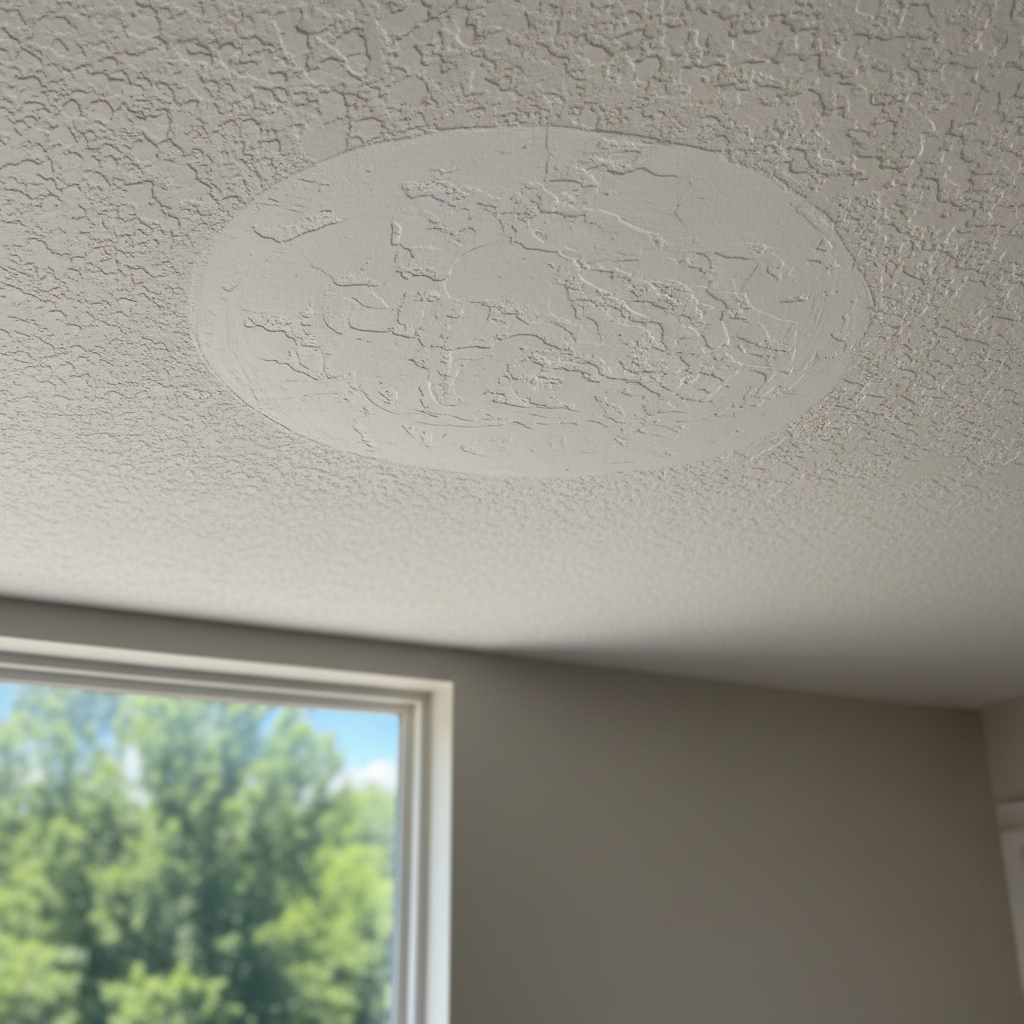
If you are dealing with a localized patch job, start by cutting away the damaged drywall using a keyhole saw. Make your cuts square or rectangular so it is easier to fit a new piece. Check the wooden framing behind the drywall. If it feels damp, set up a fan to dry it out completely. Dacula's heavy clay soil and humid environment mean moisture hangs around longer than you think, so do not rush this drying phase.
Screw a piece of backing wood into the ceiling joists, then cut your new drywall patch to fit snugly. Tape the seams, apply joint compound, sand it smooth, and texture it to match the rest of the ceiling. Always use a stain-blocking primer before painting. Otherwise, that ugly brown water ring will bleed right through your fresh white paint within a week.
After the Project: Prevention and Long-Term Care
Once the paint dries and your living room looks back to normal, your work is not quite done. Keep an eye on that section of the ceiling during the next heavy storm. Walk your property and check your gutters, especially if you have heavy tree coverage dropping pine needles and leaves near your roofline. Regular maintenance prevents the next surprise leak from forming overhead. For homes and businesses in Dacula, Summit Restoration Company provides Water Damage Restoration Service services.